


Your Heat Sat Idle Most of the Year. Here's Why It Won't Start
In Tampa Bay and Clermont, the heating side of your system runs a few weeks a year. The rest of the time it sits, collecting dust, moisture and the occasional wasp nest. So the first cold morning is when a weak capacitor, a stuck reversing valve or a failed igniter finally shows itself, and it always seems to happen before sunrise.
Before you call anyone, there are a handful of checks that solve a surprising share of no-heat calls in under five minutes. This guide walks through them in order, explains what each symptom usually means, and tells you when it is time to stop troubleshooting and pick up the phone.
Most Florida homes heat with a heat pump, not a furnace.
That matters for troubleshooting. A heat pump is the same outdoor unit that cools your house, running in reverse, and it has its own set of normal behaviors (defrost cycles, gradual warming, cool-feeling air) that get mistaken for failures. If you have gas service and a furnace, a few of the steps below differ, and we note where.
Six Checks That Fix a Lot of No-Heat Calls
Run these in order. They take a few minutes, cost nothing, and if the system starts, you have saved a service visit.
Thermostat mode and setpoint. Confirm it is set to Heat, not Cool or Auto, and the setpoint is at least three degrees above the current room temperature. Replace the batteries if the display is dim or blank.
Breakers. Check the panel for the air handler and the outdoor unit. A tripped breaker sits between On and Off. Reset it once. If it trips again, stop and call; something is drawing too much current.
Air filter. A filter clogged solid restricts airflow enough to trip a safety limit and shut the system down. Replace it, wait ten minutes, and try again.
Outdoor unit. Is the fan spinning when the thermostat calls for heat? Is the unit buried in leaves or debris? Clear two feet around it. If it is coated in frost, give it fifteen minutes to defrost before judging.
Float switch and drain line. The same safety switch that shuts the system off when the drain line backs up in summer will stop it in winter. Look for standing water in the drain pan under the air handler.
Furnace only: gas and pilot. If you have a gas furnace, confirm the gas valve is open and, on older units, that the pilot is lit. If you smell gas at any point, leave the house and call the gas company first.
Symptom, Likely Cause, and Who Fixes It
| Symptom | Likely cause | Fix |
|---|---|---|
| Heat pump blows cool air for a few minutes, then warms | Normal defrost cycle on a cold, damp morning | Wait it out |
| Heat pump blows cool air constantly | Reversing valve stuck in cooling, or low refrigerant | Technician |
| Nothing happens when thermostat calls for heat | Thermostat, breaker, blown fuse, failed control board or capacitor | Checks above, then technician |
| Outdoor unit hums but fan does not spin | Failed capacitor or fan motor | Technician |
| System runs nonstop, house never reaches setpoint | Undersized system, duct leaks, low refrigerant, or heat strips not engaging | Technician |
| Burning smell for the first few minutes | Dust burning off the heat strips after months idle | Normal once; persistent is not |
| Breaker trips repeatedly | Electrical fault, failed compressor, or shorted heat strip | Stop resetting. Technician |
| Furnace clicks but never lights | Igniter, flame sensor or gas valve | Technician |
Every repair we quote is priced after the technician inspects the system. Read what heating repairs typically involve if you want to know what to expect before the visit.
Idle Equipment Is Failing Equipment
Northern furnaces fail from overwork. Florida heating fails from neglect. When a system sits for ten months, moisture corrodes electrical contacts, dust packs the heat strips, insects nest in the outdoor unit and the reversing valve seizes in the cooling position because nothing has asked it to move since spring.
Corroded contacts and weak capacitors. Humidity does the damage over the summer; the first heating call exposes it.
Dust on the heat strips. That burning smell the first morning is months of dust cooking off. Once is normal. Every time is a dirty or failing strip.
Reversing valve stuck. The valve that switches a heat pump from cooling to heating has not moved since spring. Sometimes it does not.
Nests in the outdoor unit. Wasps, lizards and rodents move into a unit that stopped running. A fan blade hitting a nest sounds like a failure and sometimes becomes one.
Thermostat batteries. The single most common reason a heating call turns out to be nothing. Replace them every fall.
If the checks above did not bring the heat back, schedule a visit through heating services in Tampa or heating services in Clermont. Heat pump owners can also start at our heat pump services page. Protection Plan members get priority scheduling on every no-heat call.
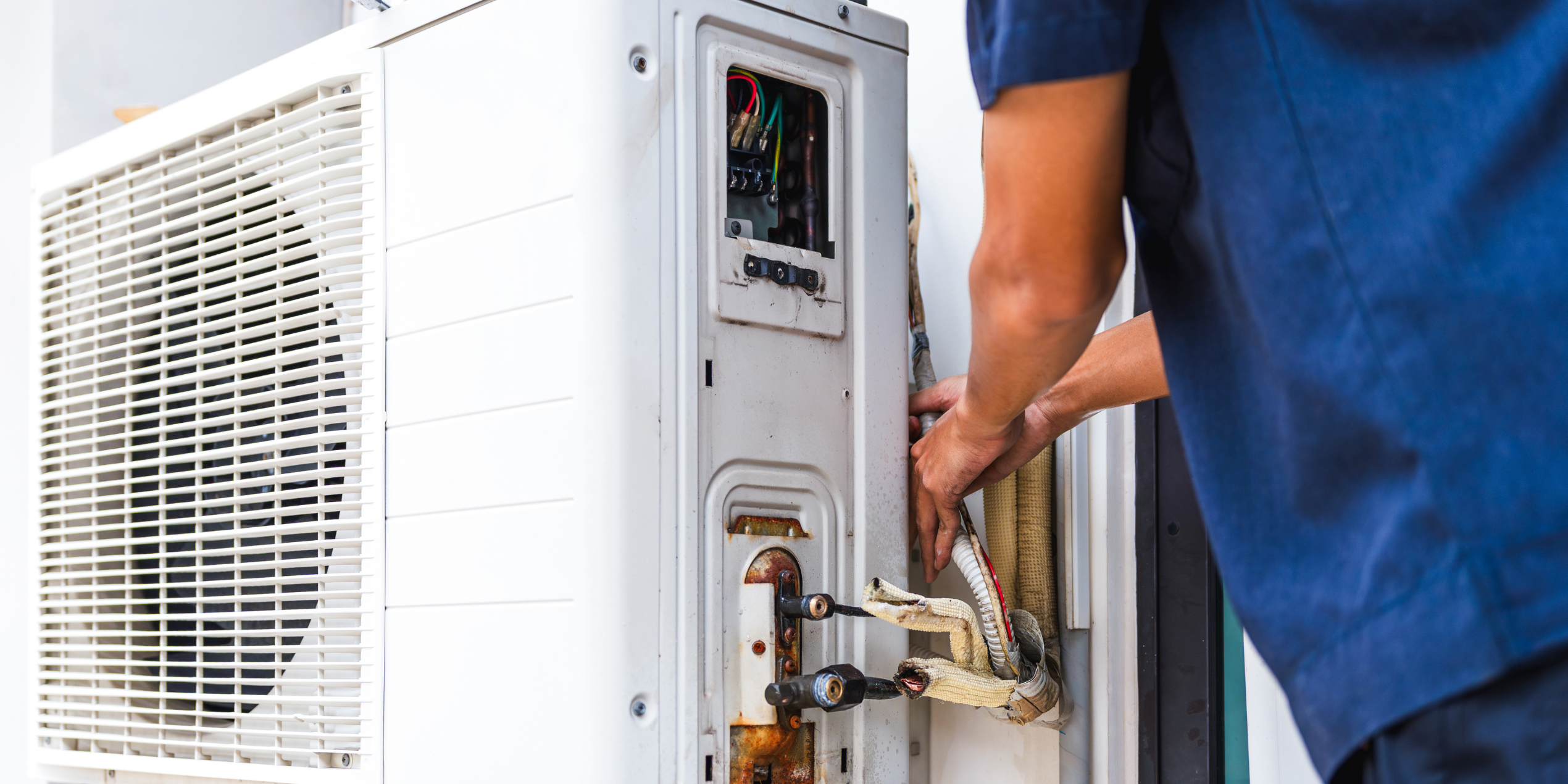
A fall heating tune-up finds most of these before the first cold morning does. It is the visit our Protection Plan members almost never regret.
The inspect-clean-test list that catches idle-equipment failures before you need the heat.
Heating Repair ServicesHeat pump, furnace and heat strip repair across Tampa Bay and Clermont. Same-day availability.
Furnace & Heat Pump InstallationWhen the system is past repair, the right replacement for a Florida home, sized correctly.
When a No-Heat Call Becomes a Replacement Conversation
Most no-heat calls end in a repair. A few end in a harder conversation, and it is better to have it with the numbers in front of you than in a cold house.
Florida equipment runs hard on the cooling side most of the year. The heating side is riding on the same compressor and the same age.
On an older heat pump, these two repairs often cost enough that replacement is the better use of the money.
A refrigerant leak on an older system means expensive refrigerant and a repair that may not hold.
If the house was always slow to warm, the system may be undersized or the ducts leaking. Replacement is the chance to fix the original problem.
Two or three service calls a year on the same unit is a system telling you something.
Our technicians tell you which way the numbers point. If repair makes sense, we repair it.
Frequently Asked Questions
Three common reasons. First, the system may be in defrost mode, which is normal and lasts a few minutes. Second, the thermostat may be calling for heat but the reversing valve, which switches the heat pump between cooling and heating, has failed, so the unit is still running in cooling mode. Third, low refrigerant from a leak means the system cannot move enough heat indoors. The first one clears on its own. The other two need a technician.
Start with the simple things: the thermostat is set to Heat and above room temperature, the breaker for the air handler and outdoor unit is not tripped, and the filter is not so clogged that a safety switch shut the system down. If all of that checks out and nothing happens when the thermostat calls for heat, the problem is usually a failed capacitor, contactor, control board or, on a furnace, an ignition or safety component.
Yes. On cold, damp mornings, frost builds on the outdoor coil. The system pauses heating for a few minutes, runs briefly in cooling mode to melt it, and you may see steam rise off the unit. The indoor air feels cool during that window. It should end within about ten minutes. If the unit stays frosted or defrosts constantly, call for service.
On a heat pump thermostat, Emergency Heat bypasses the outdoor unit and runs the electric backup strips alone. It is meant for when the heat pump itself has failed, and it is expensive to run for long. Use it to stay warm until the technician arrives, not as an everyday setting.
A heat pump warms a house gradually, a few degrees per hour, because it moves heat rather than generating it. That is normal. A furnace warms faster. If the thermostat has not moved at all after an hour, or the system runs nonstop without reaching the set temperature, something is wrong.
No heat in a home with infants, elderly residents or anyone with a health condition on a cold night is an emergency. So is any burning smell, a gas odor, or a breaker that trips repeatedly. Those get same-day priority. A system that is heating slowly or unevenly can usually wait for a scheduled visit.

