

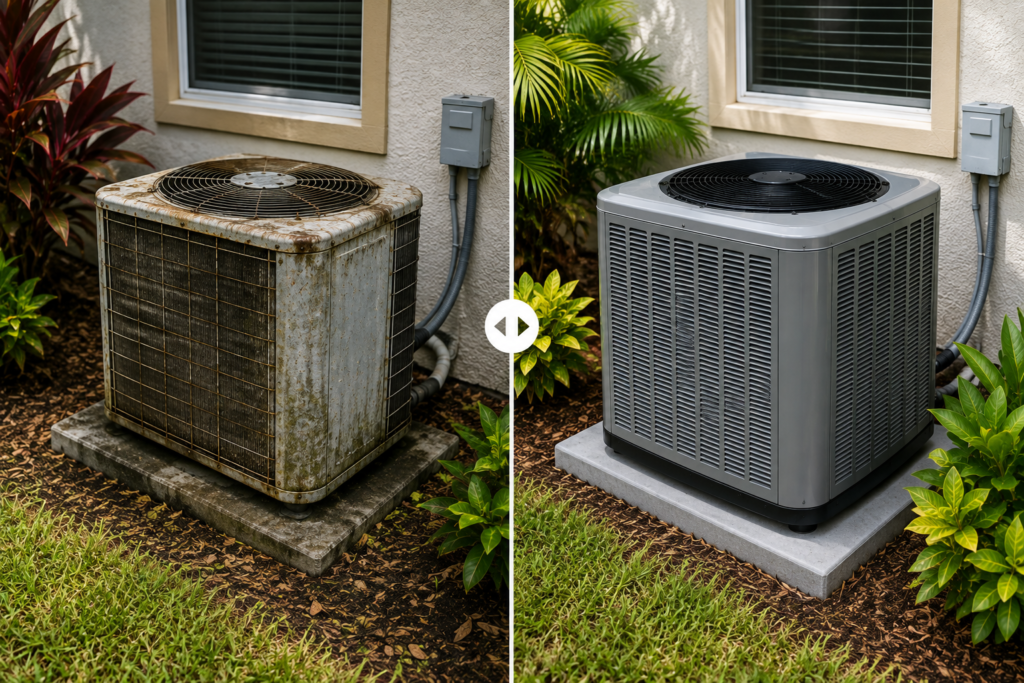
Florida Years Are Dog Years for HVAC Equipment
An HVAC system in Florida typically lasts 10 to 15 years, noticeably shorter than the national average of 15 to 20. Heat pumps here run both directions all year and usually land at 10 to 14. Homes within about five miles of the coast can lose several more years to salt air.
The gap isn't bad luck. It's workload. A Florida system runs 10 to 12 months a year, dehumidifies constantly, and never gets the seasonal rest that northern equipment counts on. This guide covers what to expect from your system, what shortens its life, and the signs it's entering its final stretch.
Equipment age and equipment condition are two different numbers.
A 12-year-old system that got two tune-ups a year may have more life left than a 7-year-old system that never saw a technician. Age starts the conversation. Condition, maintenance history, and how the system handles humidity finish it. That's what an honest in-home assessment measures.
Lifespan by System and Location in Florida
Where you live and what you run matter as much as the brand on the cabinet. Here's how the expectations break down.
| Factor | Type / Location | Expected Lifespan |
|---|---|---|
| National baseline | Central AC & heat pumps, all climates | 15 – 20 years |
| Florida overall | Central HVAC systems | 10 – 15 years |
| Geography | Inland homes with regular service | 12 – 15 years |
| Geography | Coastal homes within ~5 miles of the water | 7 – 10 years |
| System type | Heat pumps (heating + cooling year-round) | 10 – 14 years |
| System type | Packaged units fully exposed outdoors | 7 – 12 years |
| Maintenance | Regular twice-yearly tune-ups | adds 3 – 7 years |
These are ranges, not promises. Installation quality and maintenance history decide where your system lands inside them.
What's Eating Your System's Lifespan
Year-Round Runtime
Florida systems run 10 to 12 months a year, nearly double the annual hours of northern equipment. Compressors, blower motors, and controls simply log more miles.
Constant Dehumidification
Pulling moisture from the air keeps coils wet, stresses the drain system, and forces longer cycles. Humidity is a workload multiplier that national averages don't account for.
Coastal Salt Air
Salt corrodes aluminum coils, copper lines, and electrical parts. Near the water it can cut 3 to 5 years off a system's life. Monthly fresh-water rinses of the outdoor unit help.
Heat Pumps Never Rest
The same compressor cools in August and heats in January. That dual duty is why Florida heat pumps land at 10 to 14 years instead of the 15-plus seen in milder climates.
Installation Quality
An undersized system short cycles, and an oversized one never dehumidifies properly. Both wear out components early. Proper sizing at install time shapes the whole lifespan.
Skipped Maintenance
The single factor you control. Maintained systems in Tampa routinely reach the upper end of their range, and neglected ones often fail years early.
Where Your System Sits on the Age Curve
Age alone doesn't force a decision, but it does set the default. Here's the honest framing professionals use for Florida systems.
In the amber zone, run the $5,000 rule on every significant repair: system age times repair cost. Over the line, the money usually belongs in a new system.
Signs the End Is Coming
Bills climbing with normal usage. Lost efficiency is usually the first terminal symptom, showing up months before a breakdown.
Repairs becoming a pattern. Multiple service calls in a season means each fix is a bridge, not a solution.
Humidity control slipping. A sticky home with the AC running is one of the earliest signs a Florida system is losing capacity.
Uneven rooms and short cycling. Struggling airflow and constant on-off cycling point to failing components.
A major component failure. A compressor or refrigerant leak on an older system is nearly always the moment to replace instead of repair.

The best replacement is the one you planned in April, not the one you begged for in August. Systems past the 10-year mark deserve a plan before they force one.
The companion guide focused specifically on air conditioners and cooling-side lifespan.
7 Signs Your AC Needs ReplacingThe warning signs in detail, so a failing system never catches you off guard.
AC Replacement & System UpgradeWhen the timeline says replace, here's what the process looks like in Tampa Bay and Clermont.
How Tampa Systems Reach 15 Instead of 10
Systems that receive regular maintenance in Tampa routinely last 15 to 18 years, while systems that never get serviced often fail by year 10. The habits behind the long-lived systems are not complicated: filters changed every 1 to 3 months, two professional tune-ups a year, a clean and clear outdoor unit, fresh-water rinses for coastal homes, and small issues fixed before they cascade into compressor failures.
The second image below shows the age zones at a glance. If your system is in the amber zone and you haven't had an assessment in the last year, that's the move.

Frequently Asked Questions
An HVAC system in Florida typically lasts 10 to 15 years, shorter than the national average of 15 to 20 years. Year-round runtime, constant dehumidification, and coastal salt air all accelerate wear. Inland systems with regular maintenance reach 12 to 15 years, while coastal homes within about 5 miles of the water often see 7 to 10 years.
Heat pumps in Florida typically last 10 to 14 years, slightly less than the national average, because they work year-round: cooling through the long summer and heating on winter nights. The compressor never gets a season off. Coastal salt exposure can cut another 3 to 5 years, and consistent maintenance is the biggest factor in reaching the upper end of the range.
Plan replacement when the system reaches the 10 to 15 year range and shows the terminal signs: persistently rising bills with normal usage, uneven temperatures room to room, frequent breakdowns, or a major repair like a compressor or refrigerant leak that approaches the value of the unit. Replacing on your schedule beats replacing during a mid-summer failure. Our guide on the 7 warning signs covers this in detail.
Under normal conditions, no. Gas furnaces in mild climates occasionally reach 20 to 25 years with meticulous care, but central air conditioners and heat pumps max out around 15 years nationally, and 10 to 15 in Florida's relentless heat and humidity. A 30-year-old system still running is operating far below modern efficiency.
Multiply the age of the system in years by the estimated repair cost in dollars. Over $5,000, put the money toward replacement. Under $5,000, the repair usually makes sense. Treat it as a starting point and factor in warranty coverage, repair history, and how the system handles humidity.
The off-season months of spring and fall. Contractors are between the summer cooling rush and the winter heating rush, which means more flexible scheduling and better opportunities for promotions and rebates. Planning a replacement in the shoulder season also means you're never without cooling during a Florida summer. Financing options can spread the investment out either way.

