


AC Repair or Replace — How to Make the Right Call
Every Florida homeowner eventually faces this decision. Your AC is acting up, you've got a repair quote in hand, and you're wondering whether it makes more sense to fix it or cut your losses and upgrade to a new system.
There's no single right answer — it depends on your system's age, repair history, refrigerant type, and how well it's actually performing. But there are clear frameworks professionals use to make this call, and we'll walk you through all of them so you can decide with confidence.
The honest answer depends on age, condition, and what it's actually costing you.
Expert Home Service doesn't push replacements to make a sale. When you schedule a free in-home assessment, we give you an honest evaluation of whether your specific system is worth repairing — and if it's not, we'll tell you why and walk you through your options without pressure.
Repair or Replace? The Fast Answer.
Before we get into the details, here's the short version — the conditions that clearly point to repair, and the ones that clearly point to replacement.
✓ Choose Repair If...
- Your system is under 10 years old
- Major components are still under manufacturer warranty
- The repair cost is less than 30–50% of a new system's price
- It's a minor, isolated issue — capacitor, contactor, or drain line
- The system otherwise cools and dehumidifies your home well
- You've had no major repairs in the past two seasons
→ Choose Replacement If...
- Your system is 15 years old or more
- It runs on R-22 refrigerant (phased out, very expensive to source)
- Repair costs exceed 50% of a new unit's price
- You've had multiple service calls in the past 1–2 seasons
- Your home feels sticky, has hot spots, or bills keep climbing
- The compressor or condenser coil is failing
The $5,000 Rule & The 50% Rule Explained
HVAC professionals use two widely accepted formulas to cut through the guesswork. Both are useful starting points — though the real answer still depends on your specific system.
Multiply Age × Repair Cost
Take the age of your system in years and multiply it by the cost of the repair. If the result exceeds $5,000, replacement is generally the smarter investment. Some technicians now use $6,000–$7,000 as the threshold due to inflation.
Example: A 12-year-old system with a $450 repair = $5,400 → lean toward replacement.
Repair Cost vs. New System Cost
If the repair quote exceeds 50% of what a new system would cost, replacement is usually the better long-term investment. You're essentially paying half the price of new equipment to extend the life of an aging one.
Both rules are frameworks, not guarantees. A free in-home assessment gives you the definitive answer for your specific situation.
What to Consider Before Making the Call
Beyond the formulas, these five factors should shape your decision. Each one can shift the math significantly in Florida's demanding climate.
Age of the System
Under 10 years — repair is typically the most economical choice, especially if major components are still under warranty. The 10–15 year range is the grey zone — minor repairs make sense, but expect more to follow. Over 15 years — strongly consider replacement. Parts become harder to source and efficiency drops significantly.
Repair Frequency & History
One isolated repair is different from a pattern. If you're scheduling multiple service calls per season, each repair is a band-aid on a declining system. The cumulative cost of frequent smaller repairs often adds up to more than a new system within a few years.
Refrigerant Type (R-22)
If your system is more than 10–12 years old, it may run on R-22 refrigerant. Production of R-22 is now highly restricted, making recharging a leak prohibitively expensive. In this case, upgrading to a modern system using current eco-friendly refrigerants is almost always the smarter move.
Rising Energy Bills
If your cooling costs keep climbing even though your usage hasn't changed, your AC is losing efficiency. Replacing an old 10 SEER system with a modern SEER2 16+ unit can reduce cooling costs by 30–40%. In Florida where your AC runs most of the year, that difference adds up fast on every monthly bill.
Comfort & Humidity Control
Temperature is only part of the story in Florida. If your home feels sticky and humid even when the AC is running, the system is losing its ability to dehumidify — often one of the first signs of declining performance. A correctly sized, modern system restores consistent comfort in every room.
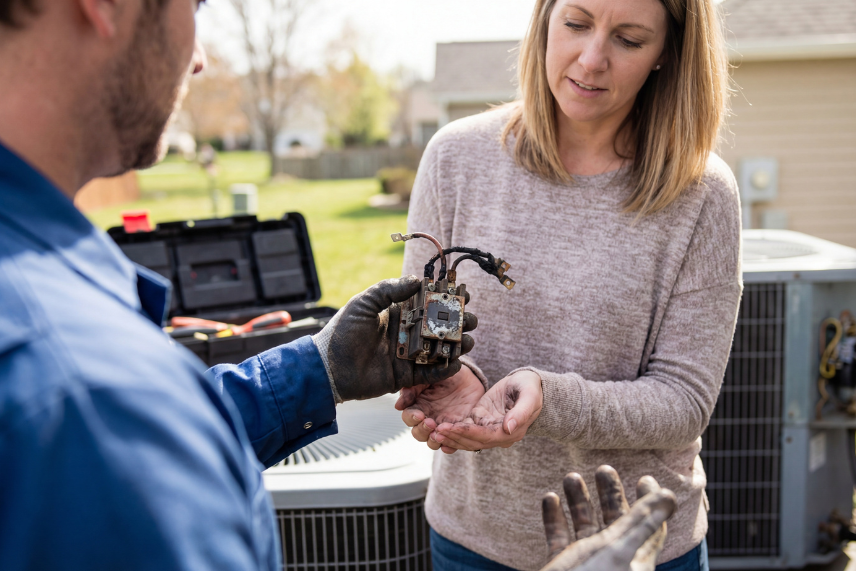
The smartest move isn't always the cheapest repair today — it's the decision that costs you the least over the next 5 years. That's what our free in-home assessment is designed to tell you.
If replacement is the right call, here's everything you need to know — sizing, installation, and what to expect.
7 Signs Your AC Needs ReplacingThe clearest warning signs that your system is past the point of sensible repair.
Financing AvailableReplacement cost doesn't have to be paid all at once. Flexible financing options available across Tampa Bay and Clermont.
Safety & Modern Technology — Worth Considering
Beyond the cost formulas, two factors often tip the decision that people overlook:
Safety First — No Debate
The moment your system presents a safety issue — carbon monoxide risk, electrical hazard, fire risk — replacement is the only decision. No cost calculation needed. No exceptions.
What Modern Systems Offer
Variable-speed compressors, SEER2 16+ efficiency, smart thermostat integration, better humidity control, quieter operation, and 10-year warranties. These aren't upgrades — they're the baseline for new systems today.
Upgrading from a 10 SEER system to SEER2 16+ can cut your cooling costs by 30–40%. In Florida where your AC runs most of the year, that difference compounds on every single monthly bill.
Frequently Asked Questions
Multiply the age of the system by the cost of the repair. If the total exceeds $5,000, replacement is generally recommended. Some technicians adjust this threshold to $6,000 or $7,000 due to recent inflation. It's a useful starting point, but a professional assessment gives you the definitive answer for your specific system.
Repair if your unit is under 10 years old, under warranty, and the repair is less than 30–50% of a new system's cost. Replace if it's older, uses R-22 refrigerant, needs frequent service, or if repair costs exceed half the value of a new unit. See our full guide: AC Replacement & System Upgrade.
The 20 percent rule suggests that if your annual repair costs exceed 20 percent of the value of your system, replacement is likely the better long-term investment. Like the $5,000 rule, it's a framework — the right answer for your specific system comes from an in-home assessment.
Yes. Most AC systems are designed to last 12 to 20 years. A 25-year-old unit is well past its useful life and is almost certainly operating at a fraction of modern efficiency — likely costing 30% or more extra in monthly energy bills compared to a new system.
Yes. Replacing an old 10 SEER system with a modern SEER2 16+ unit can reduce cooling costs by 30 to 40 percent. In Florida where the AC runs most of the year, that improvement shows up consistently on every monthly utility bill.
The 2-foot rule refers to maintaining at least 2 feet of clearance around your outdoor condenser unit on all sides. This ensures proper airflow for efficient operation, prevents debris buildup, and gives technicians safe and easy access during service calls.

