


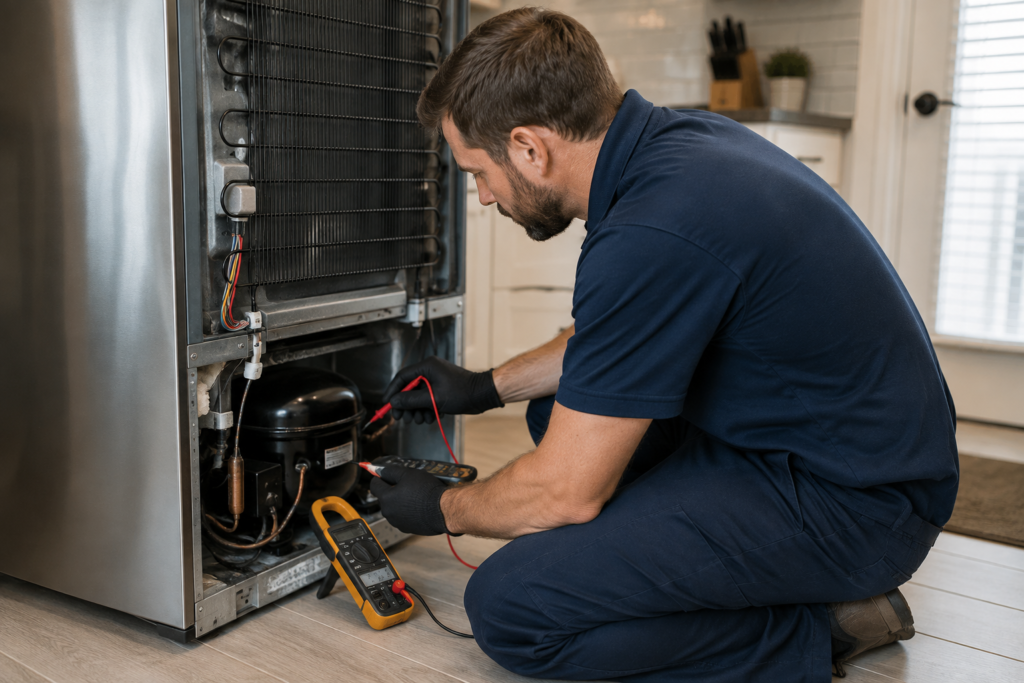
Before You Panic-Buy a New Fridge, Read This
A warm refrigerator triggers a countdown clock: groceries spoiling, decisions rushed. But a fridge that stopped cooling is often fixable, sometimes in minutes and sometimes by you, before any money changes hands. The trick is knowing which failures are worth repairing and which ones mean the appliance is done.
Here are the checks to run first, the honest repair-or-replace framework technicians use, and how long each type of refrigerator should really last.
Yes, the AC company fixes refrigerators too. Same refrigeration science.
Refrigerators and air conditioners run on the same principle: compressors, coils, and refrigerant moving heat. Expert Home Service repairs refrigerators, dishwashers, ovens, and dryers across Tampa Bay and Clermont with the same diagnose-first, no-pressure approach as our HVAC work.
5 Checks to Run Before You Call Anyone
A meaningful share of "broken fridge" calls end up being one of these. Each takes a few minutes and costs nothing.
Check the Temperature Setting
Controls get bumped, and power blips can reset them. The fresh-food compartment should sit between 35 and 41 degrees Fahrenheit. Set it, then give the fridge several hours to respond.
Clear the Internal Vents
Food packed against the back wall blocks the vents that move cold air between compartments. Pull items away from the vents and let the air path breathe.
Vacuum the Condenser Coils
Dust and pet hair on the coils underneath or behind the unit trap heat and make the compressor work overtime. Unplug the fridge and vacuum them clean. In many homes this alone restores cooling.
Inspect the Door Gaskets
Torn or loose rubber seals leak cold air and force the unit to run constantly. Close the door on a piece of paper: if it slides out easily, the gasket isn't sealing.
Listen and Feel
A freezer that's cold while the fridge is warm points to the evaporator fan or a frosted air duct. Loud clicking or buzzing from the back points to the compressor or its start relay. Note what you find; it makes the service call faster.
Repair It or Replace It: The Honest Framework
✓ Repair It If...
- The fridge is under 8 years old
- The failure is a minor part: door gasket, thermostat, fan motor, defrost timer, or start relay
- It's a built-in or high-end model, where repair is almost always cheaper than replacing
- The repair quote is well under half the price of a comparable new unit
→ Replace It If...
- The unit is past 10 years old and failing
- The compressor or sealed system has died
- It's a basic model where labor and parts rival the price of new
- Fixing one part keeps revealing the next failure in line
How Long Refrigerators Actually Last
Most refrigerators last 10 to 15 years, but the type changes the math. Simpler machines live longer.
| Type | Why | Expected Lifespan |
|---|---|---|
| Top-freezer models | Simple mechanics, fewer parts to fail | 13 – 15 years |
| Side-by-side & French door | More electronics, ice makers, dispensers | 10 – 12 years |
| Built-in / luxury units | Commercial-grade, repairable components | 20+ years |
| Compact / mini fridges | Light-duty components | 6 – 10 years |

A fridge rarely dies without warning. It runs louder, frosts over, and spoils food a little faster first. Catch it at that stage and you choose the timing instead of the fridge choosing it for you.

Diagnosis and repair for fridges that stopped cooling, across Tampa Bay and Clermont.
Appliance RepairDishwashers, ovens, and dryers too. One call covers the kitchen and laundry room.
Can Summer Weather Affect My Appliances?Why Florida heat makes appliances work harder, and what to do about it.
Frequently Asked Questions
Usually yes if the unit is under 8 years old and the problem is a minor component like a door seal, thermostat, fan motor, or defrost part. Usually no if the fridge is past 10 years old or facing a compressor or sealed-system failure, where the repair can approach the price of a new unit. The 50 percent rule settles the close calls: if the repair quote exceeds half the cost of a comparable new refrigerator, replace it.
The most frequent culprits are dirty condenser coils that trap heat, blocked air vents inside the compartments, a failed evaporator fan, or worn door gaskets leaking cold air. Several of these are things a homeowner can check and even fix before calling for service. The five checks earlier in this guide cover them.
The compressor. It's the heart of the sealed refrigerant system, and replacing it requires specialized equipment to evacuate and recharge the refrigerant lines. On most standard refrigerators past their warranty, a failed compressor is the moment replacement usually wins over repair.
Usually yes. A 7-year-old refrigerator sits near the midpoint of its expected life, so minor and moderate fixes like fans, thermostats, defrost heaters, and door seals are sensible investments. For a major sealed-system or compressor failure, weigh the quote against half the cost of a new unit before deciding.
Most refrigerators last 10 to 15 years. Simple top-freezer models tend to reach 13 to 15 years, side-by-side and French door models with more electronics average 10 to 12, built-in and luxury units can pass 20, and compact mini fridges run 6 to 10.
That pattern usually means the evaporator fan that moves cold air from the freezer to the fresh-food section has failed, or the air ducts between the compartments are blocked with frost from a defrost system problem. Both are repairable, and both are worth fixing on a fridge with life left in it. Schedule a diagnosis and we'll confirm which one it is.

