


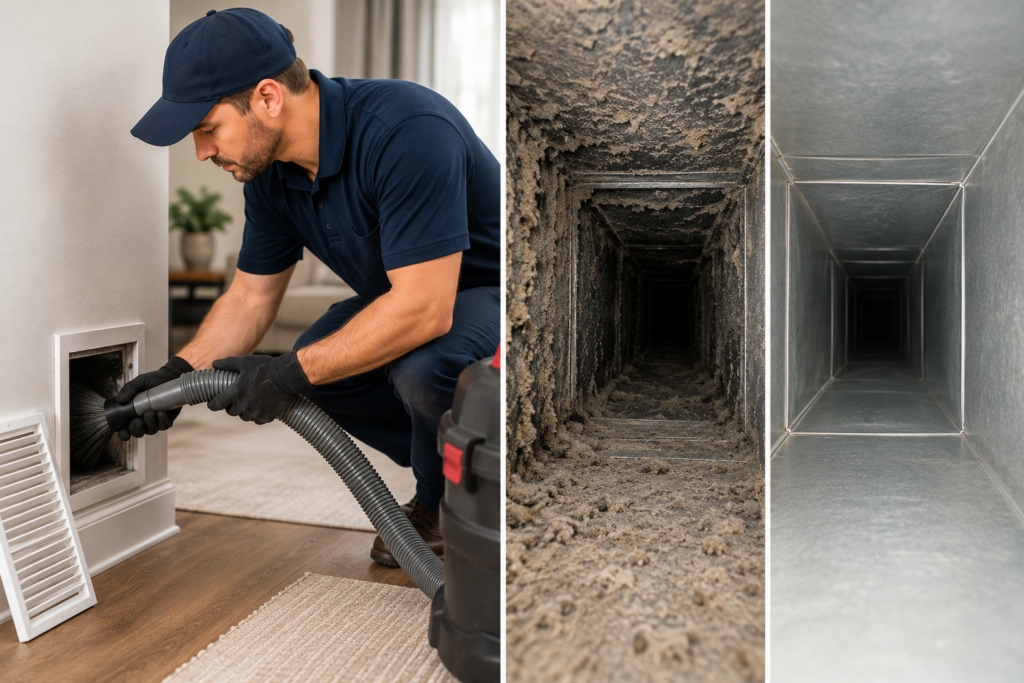
Most Homes Don't Need It. Some Florida Homes Really Do.
Here's what many duct cleaning companies won't lead with: the EPA states there is no proof that routine duct cleaning improves health or energy efficiency, because normal household dust sticks to duct surfaces instead of blowing into your air. As yearly maintenance, duct cleaning is not necessary for most homes.
Florida complicates that answer. Year-round AC use and heavy humidity make dust sticky, keep duct interiors damp, and give mold a fighting chance. So the real question isn't whether duct cleaning is a scam or a miracle. It's whether your specific home shows the signs that make it worth doing. This guide gives you both halves honestly.
If your ducts don't need cleaning, we'll tell you that.
Expert Home Service inspects before recommending. If the inspection shows normal dust doing what normal dust does, you'll hear "you don't need this yet" and what to do instead. If it shows mold, pests, or real blockages, you'll see the evidence before any work is proposed. That's the whole policy.
When Duct Cleaning Is Genuinely Worth It
Even the EPA agrees cleaning makes sense in specific situations. These are the triggers that justify the service in a Florida home.
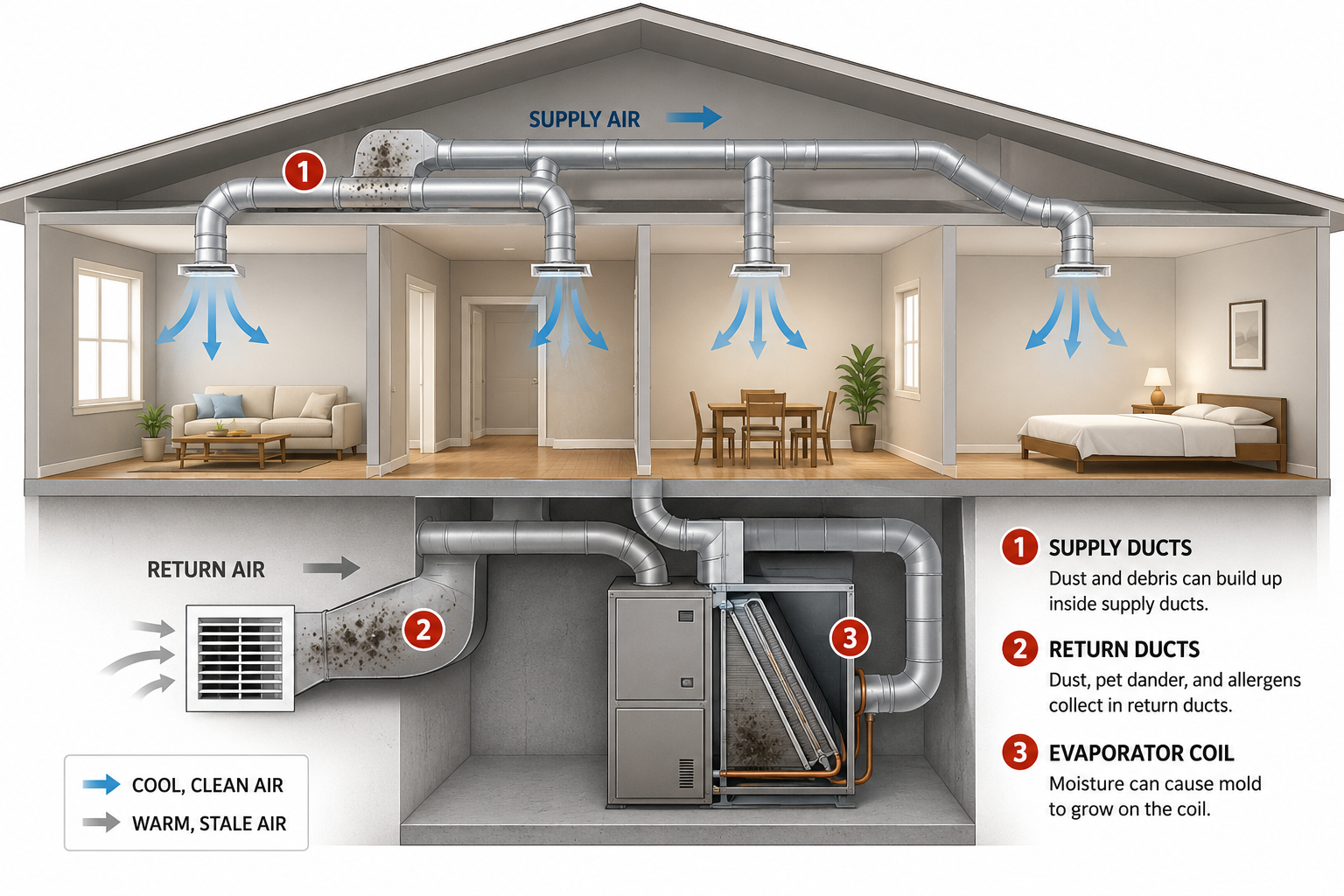
Visible mold growing on the inside surfaces of ductwork or system components. In Florida humidity, this is the trigger we see most, and it deserves prompt attention.
Pest evidence. Rodents or insects nesting, scratching sounds, or droppings inside the duct network.
Dust actually blowing from registers when the system starts, or furniture getting dusty again right after cleaning.
Post-renovation debris. Drywall dust and sawdust that entered the system during a remodel doesn't belong in your airflow.
Persistent odors in the airflow. Musty, smoky, or stale smells every time the system runs, including homes bought from previous owners who smoked.
Filters clogging abnormally fast, well ahead of their normal replacement window, which suggests the system is loaded with debris.
When cleaning is warranted, the typical Florida interval is every 3 to 5 years, tightening to 2 to 3 for homes with pets, allergy sufferers, or moisture problems. Spring and fall are the best windows, since the system has to be off during the work.
Why This Industry Has a Trust Problem
Duct cleaning isn't a sham, but the category attracts operators who make it feel like one. A thorough cleaning is a multi-hour job with specialized equipment, which is exactly why impossibly cheap offers can't deliver it. Watch for these patterns:
The Too-Cheap Special
Whole-house offers priced below what the labor could possibly cost are built to get a foot in the door, then grow through per-vent fees and add-ons once the tech is inside.
The Instant Mold Discovery
Scare tactics where "mold" is found within minutes and remediation is urgent and expensive. Real mold findings come with photos you can see and verify.
The Fake Local Referral
Neighborhood social feeds seeded with recommendations for a "local family team" that's actually a lead broker reselling your job to whoever bids.
The Bogus Certification
Claims of EPA certification or endorsement. The EPA does not certify duct cleaning companies. Legitimate credentials exist, but that isn't one of them.
There are also real drawbacks to unnecessary cleaning: careless work can tear flexible ductwork, weak equipment can spread more dust than it removes, and chemical biocides some companies push can introduce VOCs into your air. Cleaning done for the right reasons by careful hands has none of these problems. Cleaning sold for no reason invites all of them.
The Routine That Keeps Florida Air Clean
For most homes, these habits do more for air quality and efficiency than any duct cleaning, at a fraction of the cost.
- Change filters on schedule. Every 1 to 3 months in Florida, and monthly for homes with pets or allergies. This is the single highest-impact habit on the list.
- Keep coils and drain pans clean. The evaporator coil and condensate pan are where Florida moisture actually causes trouble. Routine HVAC maintenance covers both.
- Seal duct leaks. Sealing joints keeps dust out of the system and conditioned air in it, which helps both air quality and the power bill. Duct repair often matters more than duct cleaning.
- Inspect yearly for moisture. A quick annual look for condensation and mildew catches Florida's real duct threat early, before it becomes a legitimate cleaning job.
- Address humidity at the source. If indoor humidity runs high, fixing that protects the ducts, the equipment, and the house all at once.

The honest test for any duct cleaning pitch: did anyone look inside your ducts before telling you what they need? If not, you're not buying a cleaning. You're buying a script.
Inspection first, evidence second, work only when it's justified. Tampa Bay and Clermont.
Ductwork RepairLeaky or damaged ducts waste cooling and pull in dust. Often the fix that actually helps.
Indoor Air QualityFiltration, humidity control, and the upgrades that actually change what you breathe.
Frequently Asked Questions
For most homes, routine duct cleaning is not necessary. The EPA states there is no proof that routine cleaning improves health or efficiency, because normal dust adheres to duct surfaces rather than blowing into the air. It becomes genuinely worth it in specific situations: visible mold inside the ducts, pest infestations, heavy debris blowing from registers, post-renovation construction dust, or persistent odors in the airflow.
When cleaning is warranted, every 3 to 5 years is the typical Florida interval. High humidity and near-year-round AC use make dust sticky and encourage biological growth, so homes with pets, allergy sufferers, or moisture issues may benefit from inspections every 2 to 3 years. That's still a Florida-specific adjustment, not a yearly routine.
Visible mold around vents or inside ductwork, dust actually blowing out of registers when the system starts, evidence of rodents or insects, persistent musty odors when the air runs, filters that clog much faster than normal, weak airflow from specific vents, and heavy construction dust after a remodel.
Careless technicians can tear flexible ductwork or damage internal insulation, weak vacuum equipment can temporarily spread more dust than it removes, some companies apply chemical biocides that introduce VOCs into your air, and the industry attracts bait-and-switch operators. Done properly for the right reasons, none of these apply. Done cheaply for no reason, all of them can.
In a sealed, dry system, usually nothing dramatic. Normal dust stays put on duct walls and doesn't harm health. Problems come from extreme neglect combined with moisture or pests: mold growth, nesting rodents, or blockages that restrict airflow. Filter changes and routine HVAC maintenance prevent most of that without any duct cleaning at all.
Spring or fall. The HVAC system has to be shut off during the work, so the mild shoulder seasons keep your home comfortable while it's done. In Florida, that also means booking before the summer stretch when the AC can't afford a day off.

